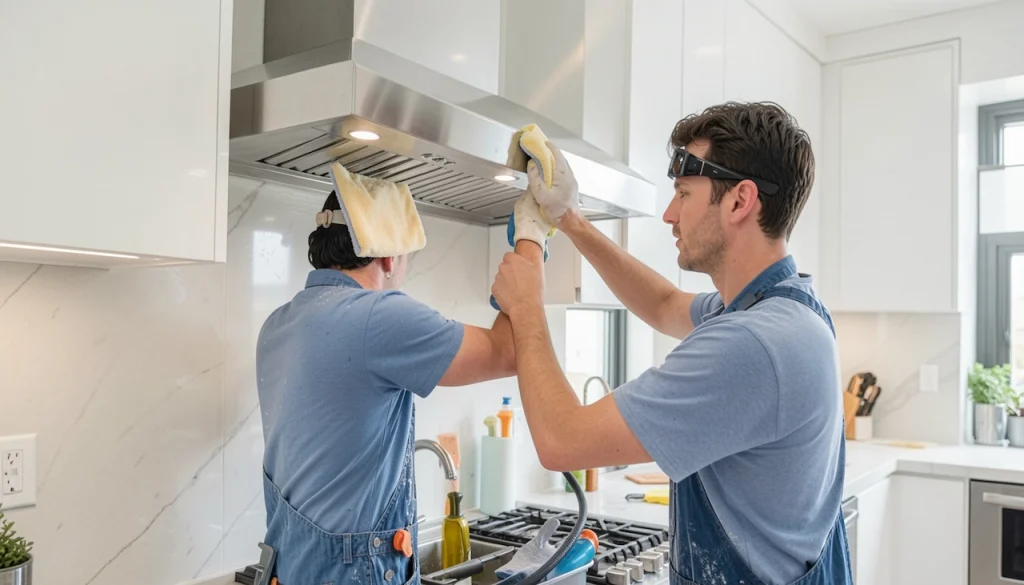
A clean kitchen is about more than sparkling countertops—it also depends on what happens above your stove. Kitchen hood cleaning is one of the most overlooked maintenance tasks, yet it plays a major role in removing grease, smoke, and cooking odors while improving indoor air quality.
I learned this firsthand after helping a friend deep-clean their kitchen before hosting a family gathering. Although the countertops looked spotless, the range hood was coated with sticky grease. Once we cleaned the hood and filters, the kitchen smelled fresher, the fan worked more efficiently, and there was noticeably less smoke while cooking. It was a simple task that made a surprisingly big difference.
Whether you cook every day or only on weekends, keeping your kitchen hood clean helps improve ventilation, extends the life of your appliance, and reduces potential fire hazards. This guide explains everything you need to know, including the best kitchen hood cleaning methods, maintenance schedules, and practical tips for lasting results.
Content
Why Kitchen Hood Cleaning Matters
Your kitchen hood is designed to capture grease, smoke, steam, and airborne particles produced during cooking. Over time, these contaminants collect inside the hood and on the filters, reducing airflow and making the ventilation system less effective, which is why regular kitchen hood cleaning is essential.
Regular kitchen hood cleaning offers several important benefits:
Improves airflow and ventilation
Reduces unpleasant cooking odors
Helps prevent grease-related fire risks
Extends the lifespan of your range hood
Enhances energy efficiency
Supports better indoor air quality
Keeps your kitchen looking clean and well maintained
Ignoring grease buildup can eventually affect the performance of your entire kitchen ventilation system, making your appliance work harder than necessary.
Signs Your Kitchen Hood Needs Cleaning
Many homeowners wait until they can see thick grease before taking action, but several warning signs appear much earlier.
Watch for these indicators:
Sticky grease on the hood surface
Reduced suction power
Strong cooking odors that linger
Excess smoke while cooking
Noisy exhaust fan cleaning needs
Visible grease on the range hood filter
If you notice one or more of these signs, it’s time to degrease kitchen hood components before buildup becomes difficult to remove.
Step-by-Step Kitchen Hood Cleaning Guide
If you’ve been searching for a step-by-step kitchen hood cleaning guide, follow these easy instructions.
Step 1: Turn Off the Power
Always switch off the range hood before cleaning to avoid accidents.
Step 2: Remove the Filters
Most clean kitchen hood filters can be removed without tools. Check your manufacturer’s instructions if you’re unsure.
Step 3: Soak the Filters
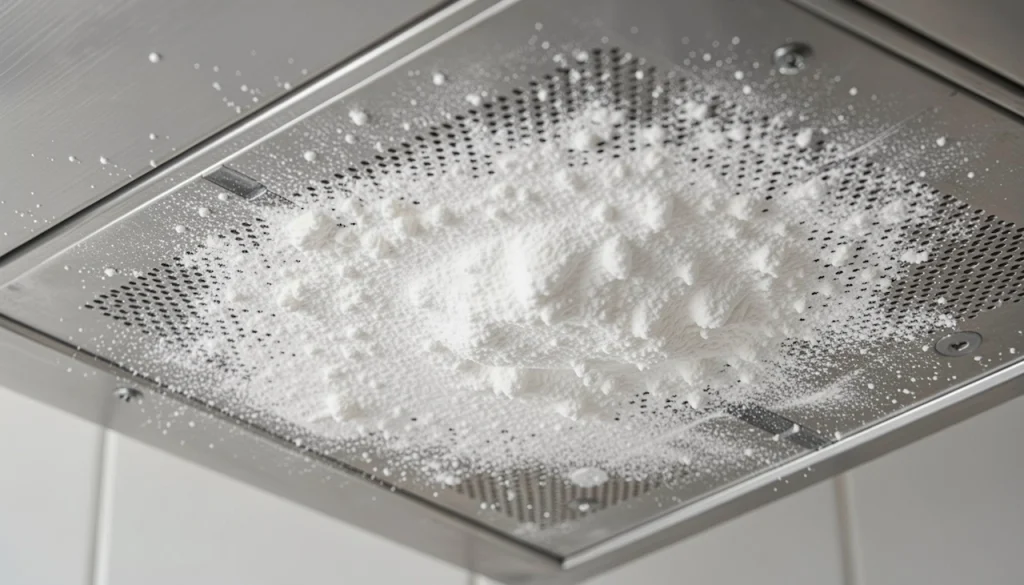
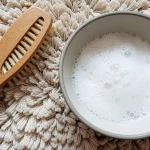
Fill a sink with hot water, dish soap, and a small amount of baking soda.Let the filters soak for 20–30 minutes to loosen grease.This is one of the easiest DIY kitchen hood cleaning tips that works well for routine maintenance.
Step 4: Scrub Away Grease
Use a soft brush or non-abrasive sponge to remove stubborn grease from the filter.
Avoid steel wool because it may scratch metal surfaces.
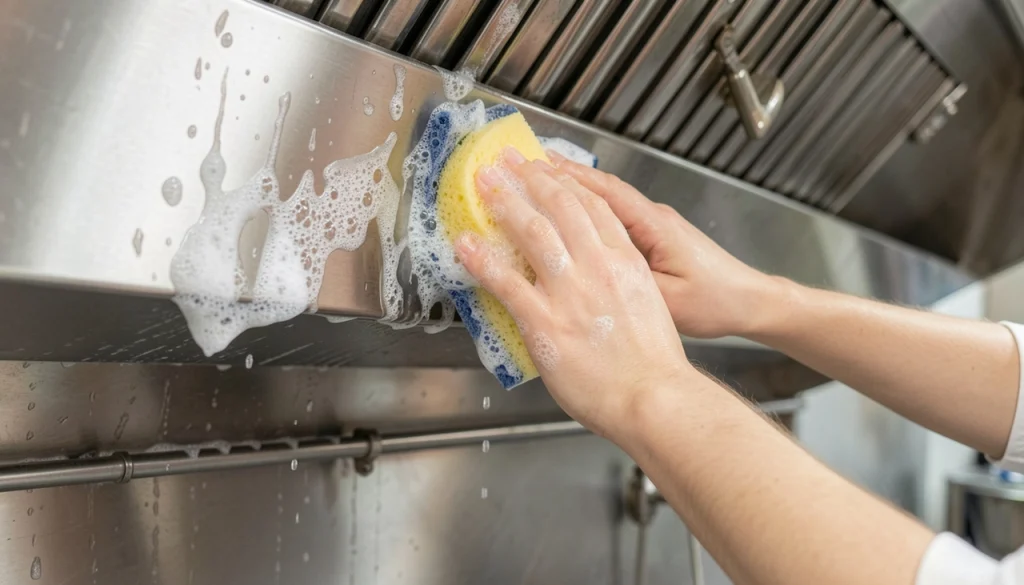
Step 5: Clean the Hood Exterior
Spray a gentle degreasing solution onto a microfiber cloth instead of directly onto the appliance.Wipe all visible grease from the hood.If you own a stainless steel range hood, always wipe in the direction of the grain for a streak-free finish.
Step 6: Dry Everything Completely
Allow all parts to dry thoroughly before reinstalling the filters.
How to Clean Kitchen Hood Filters with Baking Soda
Many people wonder how to clean kitchen hood filters with baking soda because it is inexpensive and highly effective.
Here’s a simple method:
Fill a large sink or container with hot water.
Add dish soap.
Mix in half a cup of baking soda.
Soak the filters for 20–30 minutes.
Gently scrub remaining grease.
Rinse thoroughly.
Let the filter air dry before reinstalling.
This natural approach works well for routine grease filter cleaning without using harsh chemicals.
Best Kitchen Hood Cleaning Methods
There isn’t a single solution that works for every kitchen. The best kitchen hood cleaning methods depend on how much grease has accumulated.
Popular options include:
Warm water and dish soap
Baking soda paste
White vinegar solution
Commercial degreasers
Microfiber cloths for daily maintenance
For heavy buildup, a specialized degreaser may provide faster results than homemade solutions.
Common Kitchen Hood Cleaning Mistakes to Avoid
Even simple cleaning jobs can go wrong if you use the wrong techniques.
Avoid these common mistakes:
Forgetting to clean the filters
Using abrasive scrubbers
Spraying cleaner directly into electrical components
Skipping regular maintenance
Reinstalling damp filters
Ignoring grease buildup inside visible vents
Following proper hood filter maintenance keeps your ventilation system operating efficiently.
Kitchen Hood Cleaning for Better Ventilation
Many homeowners focus only on appearance, but kitchen hood cleaning for better ventilation is equally important.A clean hood allows air to move freely through the kitchen exhaust system, helping remove:
Smoke
Steam
Cooking odors
Airborne grease
Excess moisture
Better airflow creates a more comfortable cooking environment and may even reduce moisture-related issues in the kitchen.
Real-Life Case Study: A Small Habit That Made a Big Difference
Sarah, a homeowner who enjoys cooking for her family every evening, noticed her kitchen becoming smoky even when using the exhaust fan. She assumed the appliance was wearing out and considered replacing it.
Instead, she decided to perform a deep range hood cleaning after discovering thick grease inside the filters. She soaked the filters in hot water with baking soda, cleaned the hood thoroughly, and reassembled everything once dry.
The improvement was immediate. The fan removed smoke more effectively, lingering cooking odors disappeared faster, and the kitchen felt noticeably fresher. Instead of spending hundreds of dollars on a new appliance, she restored its performance with less than an hour of cleaning.This experience highlights how routine maintenance can save money while improving everyday comfort.
When Should You Hire a Professional?
While most homeowners can handle regular maintenance, professional services may be necessary when:
Grease buildup is excessive
Internal ductwork requires cleaning
The ventilation system isn’t performing properly
You’re responsible for a restaurant or commercial kitchen
You haven’t cleaned the hood for several years
Professional technicians have specialized equipment for deep kitchen exhaust hood cleaning, particularly in commercial environments where grease accumulation can become a serious safety concern.
Simple Maintenance Tips for Long-Term Performance
Keeping your range hood in excellent condition doesn’t require much effort.
Follow these habits:
Wipe the hood weekly.
Clean filters regularly.
Replace charcoal filters when recommended.
Inspect for grease buildup each month.
Use appropriate cleaning products.
Never ignore reduced airflow.
Consistent maintenance is easier than removing months of hardened grease later.
Final Thoughts
Kitchen hood cleaning is an essential part of maintaining a safe, efficient, and pleasant cooking environment. Regular cleaning helps reduce grease buildup, improves airflow, supports better indoor air quality, and keeps your kitchen ventilation system working at its best. Whether you prefer natural solutions like baking soda and vinegar or commercial degreasers, staying consistent with maintenance is the key to long-term performance. Just as Window cleaning tips help maintain a brighter and cleaner home, regular kitchen hood maintenance keeps your cooking space fresh and hygienic. By following these practical tips and cleaning your hood on a regular schedule, you’ll enjoy a cleaner kitchen, fresher air, and greater peace of mind every time you cook.
FAQs
What are the NFPA 96 requirements for hood cleaning?
NFPA 96 requires regular hood cleaning to reduce grease buildup and lower fire risks in commercial kitchens.
Alan is a cleaning and home care writer who shares simple, practical tips to make household cleaning easier and more effective. He focuses on real-world solutions that help readers maintain a clean, organized home with minimal effort.